

I distinguish what someone reports, what I observe and how I interpret it. Pauses, repeated attempts and workarounds can reveal questions that an explanation alone leaves unanswered.
Frame the research question
I review existing research, support questions, product content and available usage data. I separate established knowledge from team assumptions, then identify the gaps that matter to the next decision.
Choose the method
I use interviews, contextual observation, task-based usability sessions, surveys or existing behavior data according to the question. Competitive analysis helps establish conventions and alternatives. I also consider whose experience is missing from the available evidence.
Interpret the evidence
I bring observations together as patterns, tensions and opportunities. I keep sources traceable, distinguish repeated findings from isolated impressions and look for evidence that challenges the initial interpretation.
Turn findings into decisions
I connect each finding to the design choice it informs. Unresolved questions return through a prototype or another round of research. When direct research is limited, I state that limit in the recommendation.
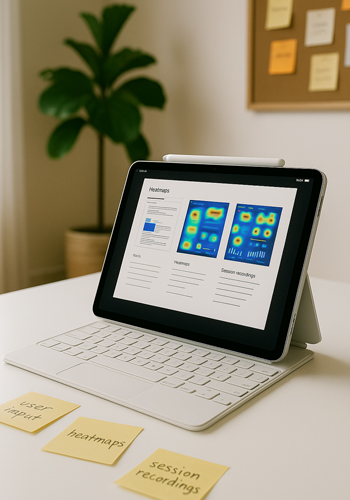
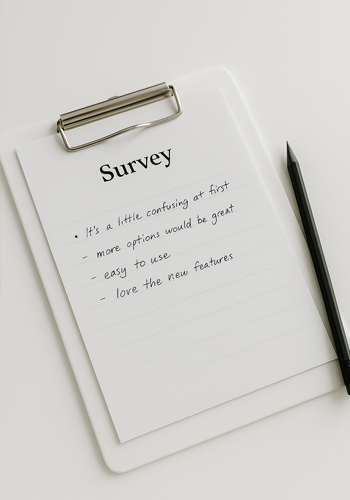
The result should give the team a clearer basis for action. I favor concise findings with traceable sources and explicit limits.
About
Me
I bring together product thinking, visual identity and interaction design, with close attention to context, clarity and the details that make an experience feel considered.
Read more