

My process moves between the overall journey and individual interactions. I revisit earlier decisions when a prototype, feedback or implementation reveals something the initial brief did not address.
Define the task and scope
I identify the people involved, the main journey and the limits of time, content and technology. I separate requirements from assumptions and keep open questions visible. The scope follows the tasks the product must support and the consequences of getting them wrong.
Set the structure
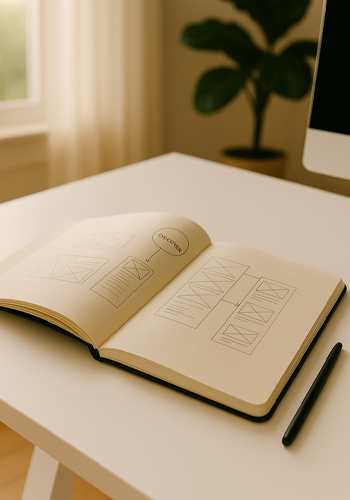
I work through information architecture, navigation and task flows before refining individual screens. I prioritize obstacles according to their impact, frequency and the effort needed to address them.
Develop the interactions
I use layouts and prototypes to work through transitions, feedback, interruptions and recovery. I then develop the visual language, reusable components and implementation notes needed to build those interactions consistently.
Review and refine
I walk through the core scenarios, use feedback and usability sessions where available, and review the implementation across screen sizes and states. I record what is resolved and what needs to be checked after release.
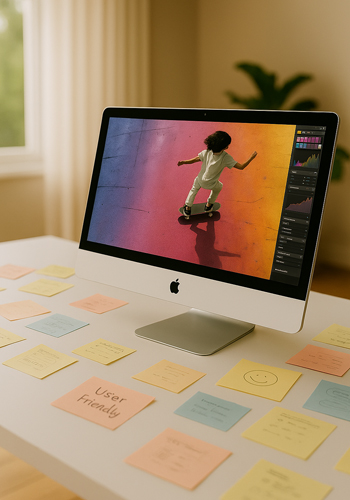
I consider a stage complete when its decisions are clear enough to build and review. Unanswered questions remain part of the work rather than disappearing at handoff.
About
Me
I bring together product thinking, visual identity and interaction design, with close attention to context, clarity and the details that make an experience feel considered.
Read more